
In a wonderful book by Alix E. Harrow entitled, Ten Thousand Doors of January, a character explains,
“Doors…are change, and change is a dangerous necessity. Doors are revolutions and upheavals, uncertainties and mysteries, axis points around which entire worlds can be turned. They are the beginnings and endings of every true story, the passages between that lead to adventures and madness and—here he smiled—even love. Without doors the worlds would grow stagnant, calcified, storyless.”
I’ve actually posted this quote outside my office door this semester so I can glance at it from time to time, mulling over its many implications. In particular, the observation that “change is a dangerous necessity.”
I feel like the older I get the more difficult change becomes. I like my routines. They provide comfort and stability in a world that seems the opposite. I realize that most of what happens outside my door is way beyond my control or even influence. Wars, rumors of wars, famines and earthquakes were all mentioned by Jesus as things that “must happen” (Matt. 23:6-8).
I don’t like that. I don’t like that at all.
On a much less epic scale, people get sick, quit their job or get fired. Relationships begin and end or change and become closer or more distant. People lose their house or they have to move and buy a new one. Children grow up, leave home, start families and/or careers. Even my body is a constant reminder of change. My hair is greyer, and as days go by I discover more age spots and wrinkles.
And every now and then, somebody wins the lottery.
For many of us, the changes experienced over these past several years have been especially challenging as a post-Covid world has forced major upheavals. I don’t know about you, but when I think of “change” I don’t have warm-fuzzy feelings about it.
Which is why I feel drawn to the above quote. There is something about it that I find hopeful. Perhaps it is the connection the author makes between change and doors.
Change can be viewed in a negative way as something that whisks us away from a long-lost past where life was filled with youth and energy and summers with no school and mom’s home cooking. A day when life was simpler and better.
And yet, my guess is that if we could somehow go back to those “good-ol’-days” we’d be reminded that not everything was as we remember. There were bullies and fighting parents and puberty and endless exams to study for.
And even an endless summer eventually gets quite boring.
So this nostalgic yearning for a past that honestly never existed is at best a futile practice that distracts us from the wonderful reality that awaits us.
Which brings us back to the hope that arises when we view change as a series of necessary doors. In other words, instead of seeing change as detours that take us away from where we want to go, we should see them as thresholds. All the great stories had them. Lucy found one when she opened the door of a wardrobe into Narnia. And Dorothy found one at the end of a tornado ride that opened into a world of technicolor.
Thresholds are gateways we pass through that force us to leave some things behind (stability, a relationship, even youth) only to discover something new that has the potential to lead to “adventures and madness…even love” as Harrow observes in the opening quote.
Because the reality is that as much as I crave routines, they do lead to a world that is “stagnant, calcified, storyless.” And that is a path that leads to an end that has no beginning.
So, “change is a dangerous necessity.” Nobody wants to listen to a story where everything is exactly the same at the end as it was at the beginning unless there is a whip, a lost ark, and Harrison Ford involved.
Nobody wants to live a story like this, either.
So go ahead. Pick a door. It probably doesn’t matter much which one. Put your hand on the nob and turn until you hear the click. Then, gently pull.
What do you see? What awaits you on the other side?
Take a step, then another, and find out.
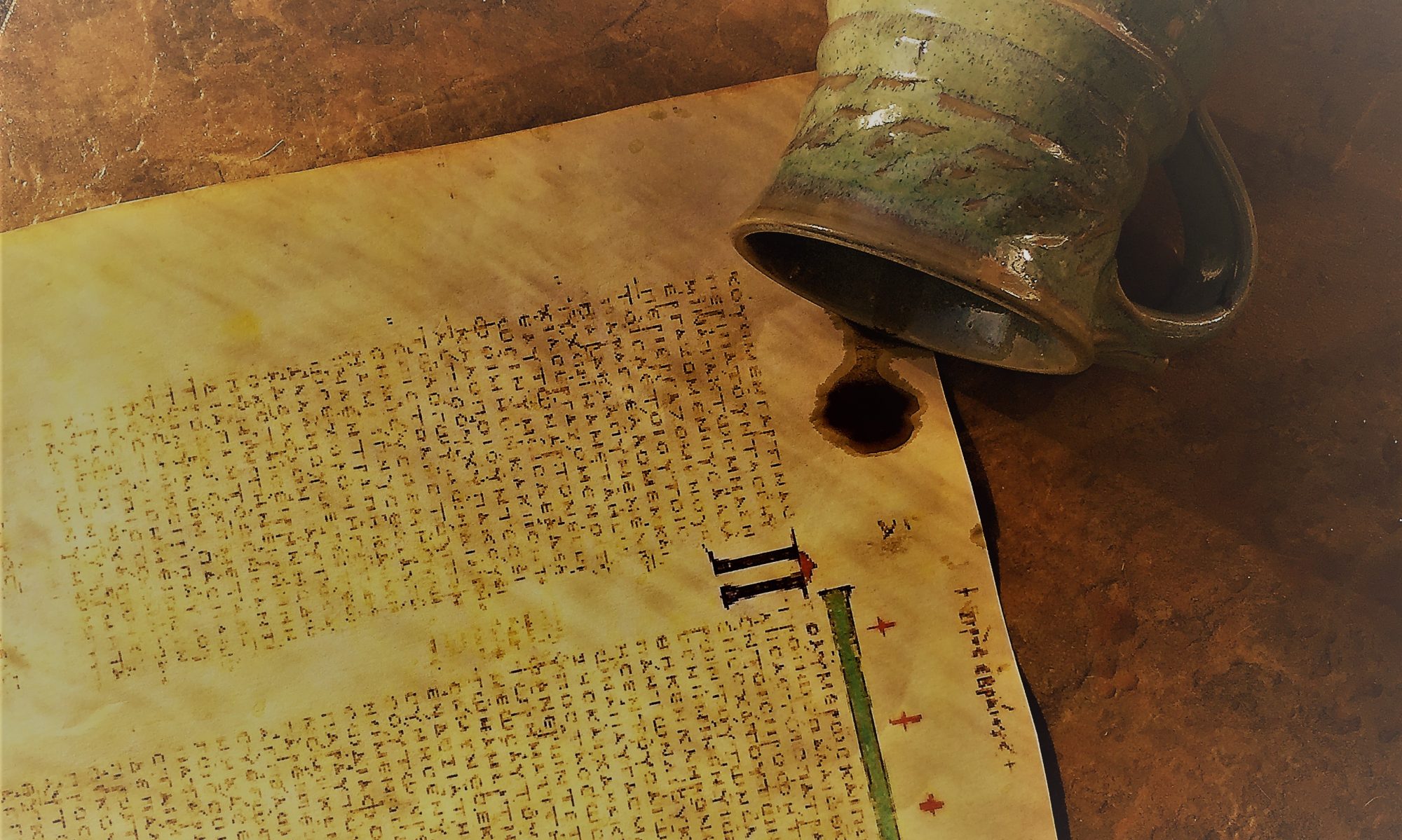
Photo credit: @wewon31 on VisualHunt.com
 Spilled Coffee on Ancient Scrolls